Amarillo Cost & Decision Guide
Stump Grinding Cost in Amarillo, TX: 2026 Prices by Stump Size
Published September 8, 2026 · Last reviewed · Amarillo, Canyon & Bushland, TX
The short answer
As of September 2026, stump grinding in Amarillo, TX runs $64–$680 per stump: $64–$128 for a small tree under 25 ft, $128–$255 for a medium tree of 25–50 ft, $255–$425 for a large tree of 50–75 ft, and $425–$680 for an extra-large tree over 75 ft. Diameter at ground level, root flare, and how many stumps you have move the number inside those tiers.
Panhandle Tree Care · (806) 555-0142 · matching Amarillo-area homeowners with independent local tree service providers.
The tiers above spread from $64 to $680 for one reason: a stump grinder is priced by how long it will chew, and that time is set by the width of the wood, the depth of the grind, and what the teeth hit on the way down. A small ornamental stump in soft bed soil is a few minutes of work. A Siberian elm stump in Wolflin with a three-foot root flare over shallow caliche is a different afternoon.
Amarillo stump grinding prices by size
| Tree size (original height) | Per-stump price |
|---|---|
| Small tree (under 25 ft) | $64–$128 |
| Medium tree (25–50 ft) | $128–$255 |
| Large tree (50–75 ft) | $255–$425 |
| Extra-large tree (75 ft+) | $425–$680 |
A note on those tiers. The aggregator that publishes them for Amarillo sorts stumps by the height of the tree that used to stand there, which is a reasonable proxy for a homeowner who remembers the tree but not the stump. The estimator who comes to your yard measures something else: the diameter of the stump at ground level and how far the root flare spreads beyond the trunk. A 40-foot tree with a fat, flared base can price like a large-tier stump. A tall, skinny tree that grew straight up in a windbreak can price like a medium one. Use the height tiers to set your expectation, then measure the flare before you call.
What moves the price
Every grinder prices a little differently, but the same handful of factors show up on nearly every Amarillo quote.
- Diameter at ground level. This is the single biggest driver. Grinders often quote by the inch of diameter, measured at the soil line and including the flare, so a wide, shallow-rooted stump costs more than a tall narrow one.
- Number of stumps. Multiple stumps in one visit usually cost less each. The trip, the unloading, and the setup are paid for once, so the second and third stumps ride along on the first one’s overhead.
- Root flare. Older Siberian elms and cottonwoods push a wide, knuckled flare above grade. Grinding the flare flat is part of the job, and it adds width to the cut.
- How deep the grind. Deeper grinds take longer. If you only need the stump gone for mowing, a shallow grind is fine. If you plan to plant grass or a bed over it, you will want the provider to go as deep as the ground allows.
- Rocks and caliche. Grinder teeth are carbide, and they still dull quickly against caliche hardpan and buried rock. Some providers add for rocky ground or stop the grind at the hardpan; see the caliche section below.
- Access through a gate. A stump behind a narrow side gate or at the back of a long lot may need a smaller walk-behind grinder, which takes longer. Some operators can pull a gate panel; ask.
- Chips hauled or left. Grinding a stump creates a surprising mound of chips. Leaving them for you to spread is the default with many providers, and hauling them off is usually a separate line.
- Bundled with a removal. A removal crew that owns a grinder will usually add the grind at a lower price than a stand-alone visit. Ask for the removal quote both ways so you can see the difference.
Honest sourcing note
The four tiers on this page are Amarillo-specific figures from a national cost aggregator, ArborHub, which attributes Amarillo’s below-national pricing to the smaller, wind-adapted species that make up most local yards. They are not a panel of local quotes, and we have not verified them against invoices. We reviewed them in September 2026 and will update the page when the source changes. If a provider’s written quote lands outside these tiers, that is a reason to ask why, not proof that anyone is wrong. Our full approach to price research is described on the methodology section of the About page.
Grinding vs. full stump removal
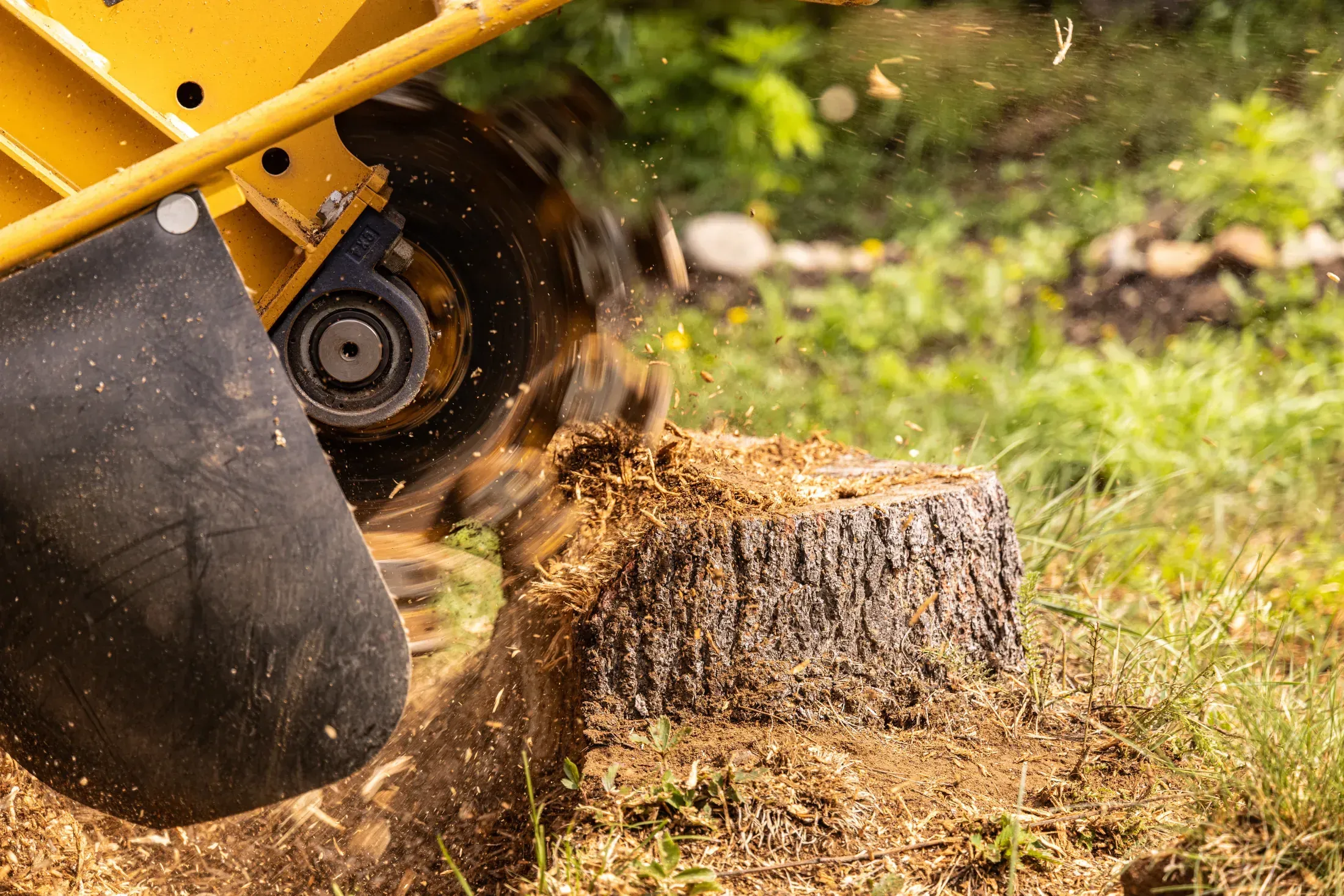
Stump grinding chews the stump down below grade and leaves the roots in the ground to rot. Full stump removal excavates the entire root ball, usually with a backhoe or mini-excavator, and leaves a hole where the tree was.
Full removal costs more than grinding, sometimes a lot more, because it involves heavy equipment, a much larger hole, and a great deal more soil to handle and backfill. It is usually only needed when you intend to build on the exact spot, pour a patio or driveway across it, run a foundation or utility trench through it, or plant a replacement tree in the same hole. For an open patch of lawn, grinding is almost always the right call.
There is no sourced Amarillo figure for full stump removal, and the cost varies with root spread and what has to be brought in. If you think you need excavation, ask the provider to price it separately from the grind so you can compare.
What’s left after grinding
A ground stump does not simply disappear. Knowing what to expect keeps the follow-up from being a surprise.
- A chip mound. Grinding turns the stump and the top of the roots into a pile of wood chips mixed with soil, often larger than the stump was. You can spread it as mulch, use it to fill low spots, or have it hauled.
- A depression that settles. Once the chips are removed or rot down, the spot sinks. Backfill with topsoil, water it, and expect to top it off again a season later before it holds grade.
- Roots that rot over years. The lateral roots stay in the ground and decompose slowly. In Amarillo’s dry climate, where the NWS narrative for the area describes humidity that occasionally drops below 15%, that decay can take a long time.
- Sprouting. Siberian elm and cottonwood roots do not know the tree is gone. Both species commonly send up suckers from the remaining roots for several seasons. Mow them, cut them at the soil line, or ask the provider about treating the cut stump before grinding.
Caliche and the depth question
Across much of Potter and Randall County, a chalky calcium-carbonate hardpan called caliche sits close to the surface, which is a large part of why local trees spread their roots wide rather than deep. Our caliche guide covers what that does to a living tree. For a stump, it does two things.
First, it dulls teeth fast. A grinder that hits hardpan or buried rock is chewing stone, not wood, and some providers price rocky ground higher or stop the grind where the hardpan begins.
Second, it limits how deep the grind can go. Providers typically grind as deep as the ground allows, and on a shallow caliche layer that may be less than they would go in softer soil. That is usually fine for lawn, and it is worth knowing before you plan a raised bed or a replacement tree on the same spot. If you have hit hardpan digging nearby, tell the estimator so the quote reflects it.
When to grind and when to leave it
Not every stump needs to go. These are the usual reasons an Amarillo homeowner decides to grind.
- Termites and ants. A rotting stump is a food source and a nesting site, and it is often close to the house.
- Mowing. A stump in the lawn is a blade-killer and a reason to weed-eat around it every week.
- Tripping. Flush-cut stumps hide in tall grass, and a flared elm stump is a real ankle hazard for kids and guests.
- Resale. A visible stump reads as deferred maintenance to a buyer walking the yard.
- Sprouts. Elm and cottonwood stumps left alone become a thicket of suckers.
The case for leaving it: the stump is out of the way, you are not planting there, and you would rather spend the money on trimming the trees that are still standing. That is a fair choice. A stump can also be turned into a planter base or left as a wildlife feature on acreage in Bushland where nobody mows.
Getting a quote you can trust
A phone estimate is fine for a single small stump, but for anything with a wide flare or several stumps it is worth having the provider look before committing to a number. Photos help: one from a few feet back showing the whole flare and the nearest gate, and one straight down with a tape measure across the widest point. Most Amarillo grinders will quote from those without a site visit.
Texas does not license tree services, so there is no state credential to check. Ask the provider for a certificate of general liability insurance and workers’ comp, and ask whether anyone on staff holds the voluntary ISA Certified Arborist credential if you also want advice on the trees you are keeping. A written quote should state the diameter it is based on, the number of stumps, the depth the provider intends to grind, and whether chips are hauled or left.
Call 811 before the grinder shows up so buried lines are marked, and if the stump is anywhere near a power line, remember that Xcel Energy handles line clearance and a private crew should not work within reach of an energized line.
If you are comparing the grind against taking the whole tree, our tree removal cost page covers the $400–$2,000+ per-tree span and what pushes a job to the top of it. For how the grinding itself works and what to do about the hole afterward, see the stump grinding service page. When you are ready, tell us about your stump and we will match you with an independent Amarillo provider who grinds.
FAQ
Stump Grinding Cost in Amarillo, TX: 2026 Prices by Stump Size: Questions Amarillo Homeowners Ask
How much does stump grinding cost in Amarillo?
Stump grinding in Amarillo costs $64–$128 for a small tree under 25 ft, $128–$255 for a medium tree of 25–50 ft, $255–$425 for a large tree of 50–75 ft, and $425–$680 for an extra-large tree over 75 ft, as of September 2026. Those are per-stump totals from an Amarillo-specific cost aggregator, not a panel of local quotes, so treat them as a sanity check for the written price a provider gives you rather than a guarantee.
Is stump grinding cheaper than stump removal?
Yes, grinding is the less expensive option because it chews the stump down below grade and leaves the roots in the ground, while full removal digs out the entire root ball. Full removal is usually only worth paying for when you plan to build, pour concrete, or plant a new tree in the exact same spot. Ask the provider for both numbers in writing if you are unsure which you need.
Why is stump grinding cheaper in Amarillo than the national average?
The aggregator that publishes Amarillo's tiers attributes the below-national pricing to the smaller, wind-adapted species that make up most local yards. A Siberian elm or hackberry that spent its life leaning into Panhandle wind rarely grows the trunk diameter of a coastal oak, so the stump is smaller and the grind is faster. Large cottonwoods on Bushland acreage are the local exception and land in the upper tiers.
Does caliche make stump grinding cost more?
Caliche can raise the price or limit the job, because the chalky hardpan sits shallow across much of Potter and Randall County and dulls grinder teeth fast. Some providers add for rocky or caliche-heavy ground, and on a shallow layer the grinder simply cannot go as deep as it would in soft soil. Tell the estimator if you have hit hardpan digging in that part of the yard so the quote reflects it.
Should I get the stump ground at the same time as the removal?
Bundling the grind with the removal usually costs less than calling a grinder out separately, because the crew is already on site with equipment. Ask for the removal quote both with and without grinding so you can see the difference. If the removal crew does not own a grinder, they will often refer a stump-only operator, and the second visit is typically priced on its own.
Can I leave the stump instead of grinding it?
You can leave a stump, but in Amarillo it tends to become a termite and ant harbor, a mower obstacle, and a tripping hazard, and elm and cottonwood stumps will keep sending up root sprouts for years. A stump also reads as deferred maintenance to a buyer at resale. If none of those bother you and the stump is out of the way, leaving it is a legitimate choice that costs nothing today.
Keep reading
Related Amarillo tree guides
Ready for a real quote from a local Amarillo tree service?
Tell us what your tree is doing and we’ll match you with an independent local provider serving Amarillo, Canyon, and Bushland. No obligation to hire.