Amarillo Homeowner Guide
Tree Removal vs. Trimming in Amarillo: Which Do You Actually Need?
Published September 8, 2026 · Last reviewed · Amarillo, Canyon & Bushland, TX
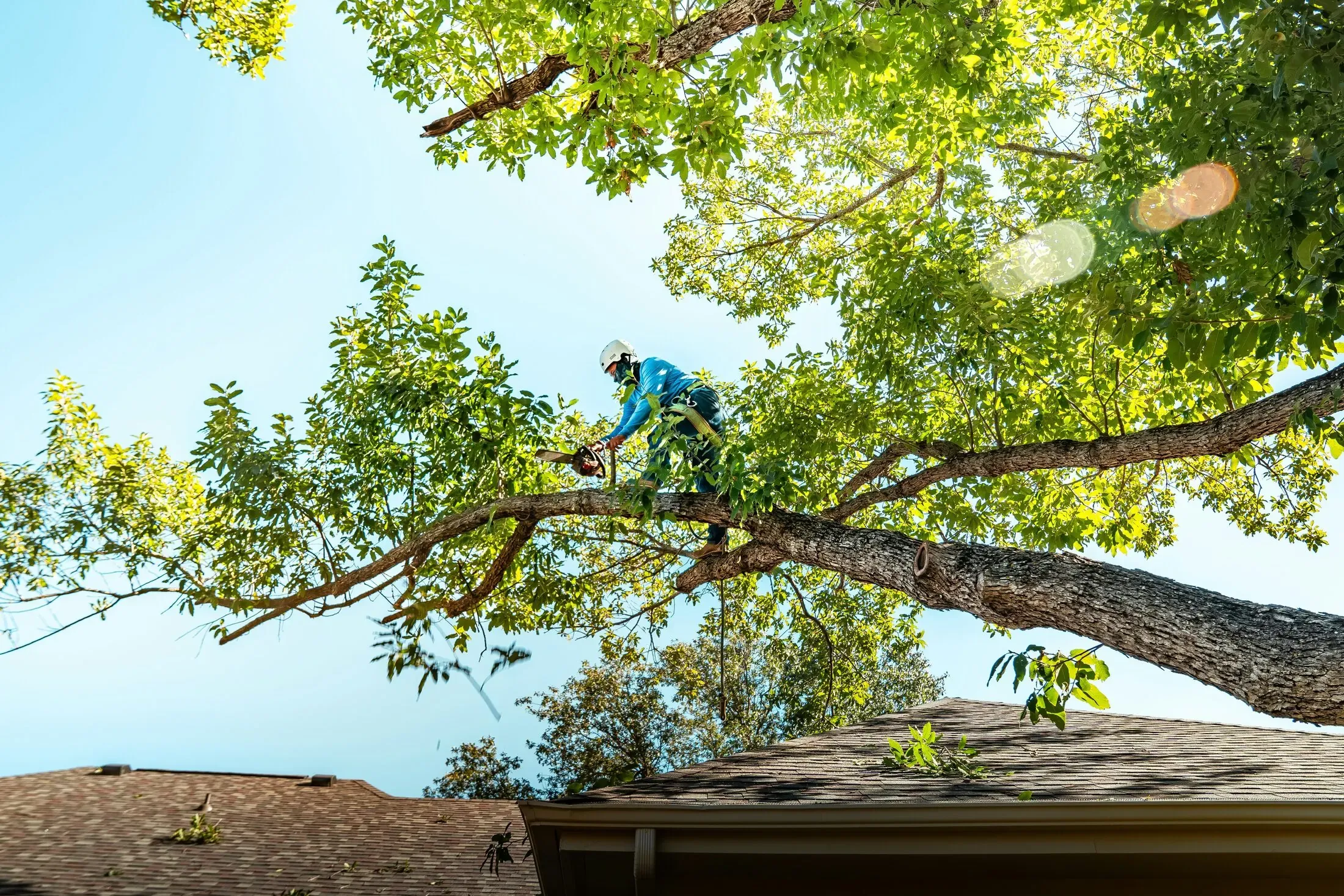
The short answer
As of September 2026, the rule of thumb for Amarillo, TX is this: keep and trim a tree when the trunk and main unions are sound and the problem is in the canopy, and remove it when the structure is compromised, more than about a third of the canopy is dead, or the tree can't be made safe near what it could hit. Trimming runs $100–$1,200 per tree locally; removal runs $400–$2,000+ per tree plus $64–$680 to grind the stump.
Panhandle Tree Care · (806) 555-0142 · matching Amarillo-area homeowners with independent local tree service providers.
The tree in your yard is asking a question, and it isn’t really “trim or remove.” It’s “what’s wrong, and where is the problem?” Once you can point at the problem, the answer usually points at itself. Most of the expensive mistakes Amarillo homeowners make with trees come from answering the second question before the first one.
The questions that decide it
Is the problem in the structure or the canopy?
This is the one that matters most. A tree has two very different parts from a safety standpoint. The structure is the trunk, the root plate, and the main unions where the big limbs meet the trunk. The canopy is everything out beyond that, the branches and leaves.
Trimming fixes canopy problems. Dead limbs, limbs over a roof, a lopsided shape, growth into a line, a canopy that’s too thick to move wind through. All of those can be pruned away, and the tree that’s left is the same tree, just lighter and cleaner.
Trimming does not fix structural problems. A crack down a main union, a seam with bark folded into it, a hollow at the base, fungus growing out of the root flare, a trunk that has started to lean with the soil heaving on the far side. Those problems are in the part of the tree you can’t cut off. You can remove weight above them to buy time, but you cannot prune your way out of them.
So the first question standing in the yard is: where is the trouble? If it’s above the first big unions, you’re probably looking at a trim. If it’s at or below them, you’re probably looking at a removal, or at least at an inspection by someone who can tell you honestly.
What’s within reach if it fails?
The same defect means different things depending on what the tree could hit. A cracked limb over an open side yard is a nuisance. The same limb over a bedroom is a decision.
Walk the drip line of the tree and note what’s underneath and within a tree-length in every direction: the house, the garage, the neighbor’s roof, a fence, the driveway where cars sit, the service drop from the pole. Then ask whether the tree can be made safe near those targets. A tree with a modest problem over nothing much can be trimmed and watched. A tree with the same problem over a house may need to come out, not because the tree is worse, but because the consequence of being wrong is worse.
What species is it, and how old?
Amarillo’s older neighborhoods, especially Wolflin, are commonly full of mature Siberian elms, planted decades ago because they’d grow in anything. They’re brittle, and they shed limbs. A big old Siberian elm with a sound trunk can be worth keeping for shade for years with regular deadwooding. One that has started to split at a main union is a different animal, because the wood that’s left is the same brittle wood that already failed.
Cottonwoods, common on Bushland acreage and along old draws, grow fast, drink more water than the Panhandle provides, and tend to hollow out with age. A cottonwood with a big old wound at the base is often hollow behind it. Trimming a hollow cottonwood makes it lighter, which helps, but it doesn’t make it solid.
Hackberry, honey locust, and Austrian pine generally age better here. An arborist will weigh species and age when telling you whether a trim buys years or months.
What do you want the yard to be?
Sometimes the honest answer is that nothing is badly wrong with the tree, and you just don’t want it. It shades the garden you’d like to plant, the roots are lifting the driveway, it drops cotton every June. That’s a legitimate reason to remove a tree, and it’s worth being clear that it’s the reason. The flip side holds too: if the tree is what makes the backyard bearable in July, the bar for removing it should be higher than “it’s a little messy.”
Trim or remove: a problem-by-problem table
| What you’re seeing | Usually trim | Usually remove | Needs an inspection first |
|---|---|---|---|
| Scattered dead limbs, trunk sound | Yes | ||
| Limbs over the roof or driveway, tree otherwise healthy | Yes | ||
| Canopy grown into the service drop or a line | Yes, but call the utility about anything near an energized line | ||
| Tree touching or lifting the house, foundation, or a slab | Yes | ||
| More than about a third of the canopy dead | Yes | ||
| Crack or split through a main union | Often | Yes, if the tree is otherwise valuable | |
| Included bark (a tight V-fork with bark folded inside) on a big union | Yes, cabling or reduction may be options | ||
| Hollow trunk, cavity at the base, or you can push a probe in | Usually | Yes | |
| Mushrooms or shelf fungus at the root flare | Usually | Yes | |
| New lean with lifted or cracked soil on the opposite side | Yes | Call quickly | |
| Long-standing lean, no soil movement, sound trunk | Yes, reduce weight on the lean side | ||
| Topped years ago, now full of long weak sprouts | Sometimes, if young enough to retrain | Often, if large and over a target | Yes |
| Surface roots lifting the sidewalk or driveway | Yes, root cutting can destabilize the tree | ||
| You just don’t want the tree | Your call |
The middle of that table is where an ISA Certified Arborist earns their fee. The rows on the left and right are usually clear from the sidewalk.
Cost side by side
Local Amarillo companies publish their own price ranges, and this is what they say. All figures are per tree.
| Trimming or pruning | Removal | |
|---|---|---|
| Full local range | $100–$1,200 | $400–$2,000+ |
| Typical job | $250–$800 | Small ornamental $400–$600; mid-size $600–$1,100; large in open yard $1,100–$1,600; large near a structure or line $1,600–$2,000+ |
| Stump | Not applicable | Stump grinding usually quoted separately, $64–$680 per stump depending on size |
| Debris | Usually included; confirm | Sometimes separate, $100–$200+ if quoted apart |
Notice that the top of the trimming range overlaps the bottom half of the removal range. A full-day crown reduction on a big Siberian elm over a house can cost more than removing a small tree in the open, so “trimming is cheaper” is true on average and not always true for your tree.
Notice the stump line too. When you remove a tree, the stump is a second decision and usually a second line item, so the fair comparison is a trim against the removal plus the stump, or against living with the stump.
For the fuller breakdowns, see tree trimming cost in Amarillo and tree removal cost in Amarillo.
The trap of trimming a tree that should come out
This is the more common mistake, because it’s the cheaper decision in the moment.
The pattern goes like this. A big old elm drops a limb in a spring front. A tree service comes out, cleans up the deadwood, thins the canopy, and charges somewhere in the middle of the trimming range. The tree looks better. The next spring, another limb comes down, this time from a union that had a crack in it all along. Now the tree needs to come out, and you’ve paid for a trim and a removal on the same tree within a year or two.
If the trunk or a main union was already compromised the first time anyone looked, the trim was buying time rather than fixing anything, and it’s worth knowing that’s what you’re buying. A good provider will tell you. Ask directly: “If this were your tree, would you trim it or take it out, and why?” If the answer is “trim it for now,” ask how many years that’s likely to buy and what to watch for.
The trap of removing a tree that could be saved
The opposite mistake is quieter, because nobody gets a second bill. The tree is just gone.
A mature shade tree in Amarillo does real work. It shades the west wall of the house through the hottest part of the day, it drops the temperature of the yard underneath it, and it’s part of what makes an older neighborhood feel like one. A tree that took forty years to get that size cannot be replaced in your time in the house.
Two things push homeowners into removing trees that could have stayed.
The first is a storm. A big limb comes down, the yard looks like a disaster, and in that moment removing the whole tree feels like the safe choice. But a limb failure in the canopy doesn’t by itself mean the structure is bad. Once the mess is cleaned up, the question is the same one as always: is the trunk sound, and are the main unions intact? If yes, the tree may be fine with a proper reduction.
The second is who you ask. A company whose only service is removal will, in good faith, tend to recommend removal. It’s the tool they have. A company that also prunes, or an ISA Certified Arborist who consults without doing the work, has a wider set of answers. If you’re being told a tree that looks mostly healthy needs to come out, it costs little to get a second opinion before the saw starts, and to ask specifically whether an arborist looked at it. Texas doesn’t license tree services, so the ISA credential is a voluntary one, and it’s worth asking whether anyone on the job holds it.
What crown reduction can and can’t fix
You’ll hear “crown reduction” offered as the middle path, and it’s worth understanding what it is.
A crown reduction shortens the outer canopy by cutting branches back to a lateral limb that can take over as the new end. Done well, it makes the tree smaller, lighter, and less of a sail in the wind, without the stubbed-off look and weak regrowth of topping. It’s a genuine tool for a healthy tree that’s simply gotten too big for its spot: too far over the roof, too close to the line, too heavy on one side.
It can fix:
- Weight and leverage over a house, garage, or driveway
- A canopy that’s grown lopsided and is pulling the tree toward its heavy side
- A tree crowding a structure or a line while the trunk is still sound
- A tree that’s simply outgrown its space and would otherwise be removed for size alone
It cannot fix:
- A crack, split, or decay in the trunk or a main union
- A hollow base or fungus at the root flare
- A new lean with the root plate moving
- Damage done by earlier topping, which usually just needs to be managed year by year
If the reason you’re considering removal is in the second list, a reduction is at best a delay. If it’s in the first list, a reduction is often the right answer and considerably cheaper over the life of the tree.
Timing: work with the Panhandle’s calendar
The Texas Panhandle gets a primary hail season from March through early May, peaking in April and early May, and a smaller secondary season in September and October. Spring fronts also bring the straight-line wind that shears limbs off elms across town.
That gives you a practical timing rule. For trimming, the dormant season in late fall and winter is generally the preferred window: the tree’s structure is easy to see without leaves, and the work is done before the spring fronts arrive. For removal, timing matters less; a hazardous tree shouldn’t wait for a season, and a healthy tree you’re removing for other reasons can go whenever the schedule allows.
If you’re reading this in the fall, get the deadwood and the heavy limbs over the house handled now, and the tree goes into hail season lighter. If you’re reading this in April with a storm on the radar, deal with anything hanging over a target and leave the bigger decision for calmer weather. The emergency page covers what to do if the storm gets there first.
If you’re honestly not sure which side of the line your tree is on, that’s what the diagnostic walk-around is for, and it’s what an ISA Certified Arborist can settle in a single visit.
FAQ
Tree Removal vs. Trimming in Amarillo: Which Do You Actually Need?: Questions Amarillo Homeowners Ask
How do I know if my tree needs to be trimmed or removed?
Look at the trunk and the main unions first, not the branches. If the trunk is solid, the unions where the big limbs meet it are tight and uncracked, and the trouble is dead wood or overgrowth up in the canopy, trimming usually fixes it. If the trunk is cracked, hollow, leaning with heaved soil, or more than about a third of the canopy is dead, the tree is a removal candidate and a trim will only delay the decision.
Is it cheaper to trim a tree than to remove it in Amarillo?
Usually yes, per visit, but not always over time. Local companies publish trimming at $100–$1,200 per tree and removal at $400–$2,000+ per tree, with stump grinding another $64–$680 if you remove. A trim on a tree that is going to come out anyway is money spent twice; a removal on a tree that could have been kept costs shade and value you don't get back.
Can a dying tree be saved by trimming?
Sometimes, if the dieback is limited and the cause has been addressed. A tree with scattered dead limbs and a sound trunk often responds to removing the dead wood and correcting watering. A tree that has lost a large share of its canopy, or that has decay at the base or in the trunk, generally cannot be trimmed back to health, and cutting more off it tends to make things worse.
What is crown reduction, and is it a way to avoid removal?
Crown reduction shortens the outer canopy back to lateral branches so the tree ends up smaller and lighter without being topped. It works well for reducing weight over a roof or pulling a healthy tree back from a line. It does not fix a cracked trunk, a hollow base, root damage, or a lean, because none of those problems live in the canopy.
When is the best time of year to trim or remove a tree in Amarillo?
For trimming, the dormant season in late fall and winter is generally preferred, and it lands before the Panhandle's primary hail season in March through early May. Removal can happen any time of year, and a hazardous tree should not wait for a season. If you have a choice, getting deadwood and heavy overhanging limbs handled before spring fronts arrive is the practical target.
Keep reading
Related Amarillo tree guides
Ready for a real quote from a local Amarillo tree service?
Tell us what your tree is doing and we’ll match you with an independent local provider serving Amarillo, Canyon, and Bushland. No obligation to hire.